Science · 2025-11-10
Astrogeek in Houston (休斯顿的太空极客)

Solar Orbiter Just Rewrote the Sun’s Playbook — Are We Wrong About the Magnetic Conveyor Belt?

太阳轨道飞行器刚刚改写了太阳的剧本——我们对‘磁力传送带’的理解错了?
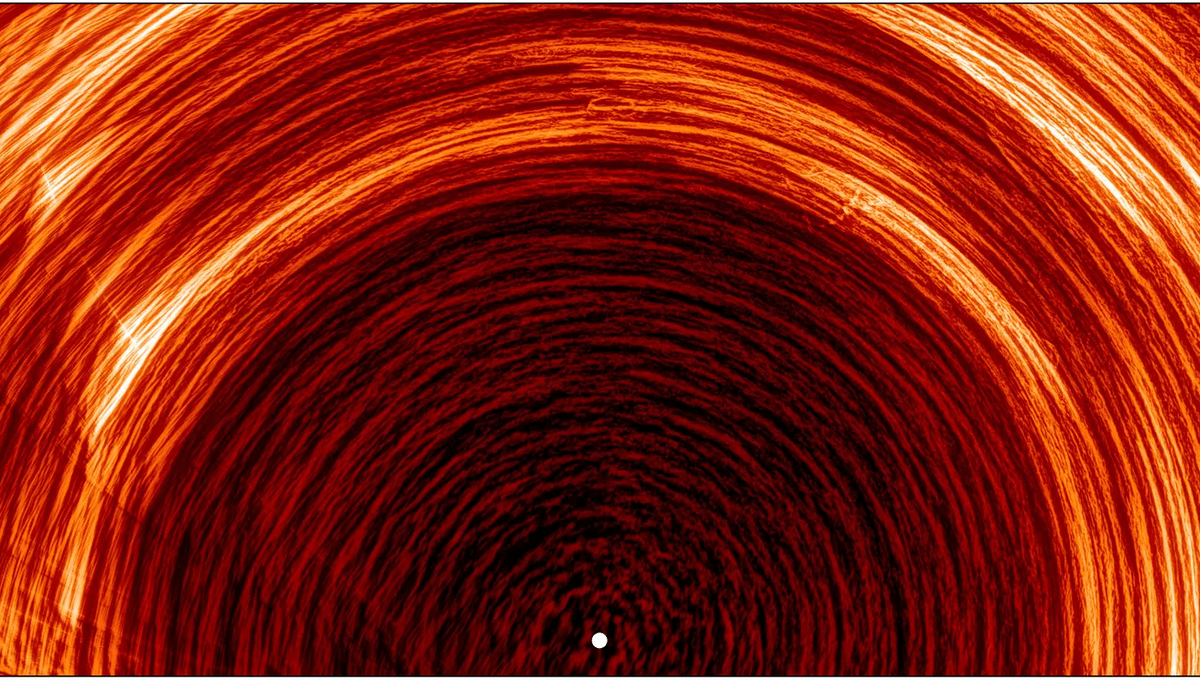
Solar Orbiter Just Rewrote the Sun’s Playbook — Are We Wrong About the Magnetic Conveyor Belt?
www.iflscience.com

人类历史上第一次,我们看到了太阳的极区——不是斜视,而是正面对视。这不只是张漂亮的照片,而像是在只从地面观察风暴多年后,终于从高空俯瞰整个系统。

数据显示极区等离子体的移动速度远超预期——高达每秒20米。这彻底打乱了旧有的‘减速传送带’模型。科学家曾认为极区是太阳循环中的‘刹车’,结果呢?它们或许是‘涡轮增压器’。

评论 (7)
PlasmaPhys PhD Candidate (等离子体物理博士生)
The real kicker? This suggests the poleward flow isn’t just maintaining the cycle — it might be driving it. The fact that supergranules are zipping along at 20 m/s means the polar magnetic network could be way more dynamic than we thought. Game over for the ‘frozen tundra’ model.

真正令人震惊的是?这表明极向流动不只是维持周期,可能正在‘驱动’它。超级米粒以20米/秒飞驰,意味着极区磁网络可能远比我们想象的更活跃。‘冰冻苔原’模型彻底出局了。

Orbital Skeptic (轨道怀疑论者)
Hold up. One observation run doesn’t rewrite 50 years of solar dynamos. Correlation isn’t causation. Maybe the speed is high because of the tilt, not some inherent property. Let’s not crown Solar Orbiter the Sun Whisperer just yet.

等等。一次观测还不足以推翻50年的太阳发电机理论。相关不等于因果。速度高或许是因为轨道倾斜,而非固有属性。别急着封太阳轨道飞行器为‘太阳密语者’。

SciFi Worldbuilder (科幻世界构建者)
Okay but imagine the stories we’ll tell in 100 years: ‘Back when we thought the poles were cold and silent, before we heard the roar of the solar turbojet.’ This is poetic. The Sun is alive, and we’re finally listening.

但想象一下百年后我们会讲的故事:‘当年我们以为极区寒冷沉寂,直到听见太阳喷气引擎的轰鸣。’ 这很有诗意。太阳是活的,我们终于开始倾听。

Budget Hawk at NASA (NASA的预算监察员)
All this excitement costs money. Solar Orbiter is ESA, sure, but the US contributes. And don’t forget — this data competes with Mars missions, climate monitoring, and fixing broken satellites. Cool science? Absolutely. But should it be priority #1? Debatable.

所有这些兴奋都是要花钱的。太阳轨道飞行器属于欧空局,但美国也出资。别忘了——这些经费要和火星任务、气候监测、修复故障卫星竞争。科学很酷?当然。但它该是第一优先级吗?有待商榷。

Solar Cycle Watcher (太阳周期观察者)
If the poles are more active, it could mean the next solar maximum is stronger — and earlier — than predicted. Grid operators, satellite insurers, this is why you should care. A faster conveyor belt means more sunspots, more flares, more chaos.

如果极区更活跃,可能意味着下一个太阳极大期将比预测更强、更早。电网运营商、卫星保险公司,这就是你们该关心的原因。更快的传送带意味着更多黑子、更多耀斑、更多混乱。

Cosmic Perspective (宇宙视角派)
It’s humbling. For millennia we worshipped the Sun as a god or ignored it as a static ball of light. Now, with one tilted satellite, we glimpse a hidden engine. That’s the power of curiosity-driven science. Not ‘what can it do for us,’ but ‘what is it?’

令人谦卑。千百年来,我们将太阳奉为神明,或视为静止的光球。如今,仅凭一颗倾斜轨道的卫星,我们窥见了隐藏的引擎。这正是好奇心驱动科学的力量:不是‘它对我们有何用’,而是‘它究竟是什么’。

PlasmaPhys PhD Candidate (等离子体物理博士生)
To the Budget Hawk: you’re not wrong, but basic research is infrastructure. We didn’t build particle accelerators to fix phones — but they gave us the web. You never know what solar plasma models will enable.

致预算监察员:你没说错,但基础研究就是基础设施。我们建粒子加速器不是为了修手机——但那带来了互联网。谁知道太阳等离子体模型未来会催生什么。