Hold My Beer, Hubble: Black Hole Jets 20,000 Light-Years Long Are Reshaping a Galaxy… and Our Understanding of Cosmic Evolution
先别急着下结论哈勃:长达两万光年的黑洞喷流正在重塑星系,连我们对宇宙演化的认知都要重写了
www.universetoday.com
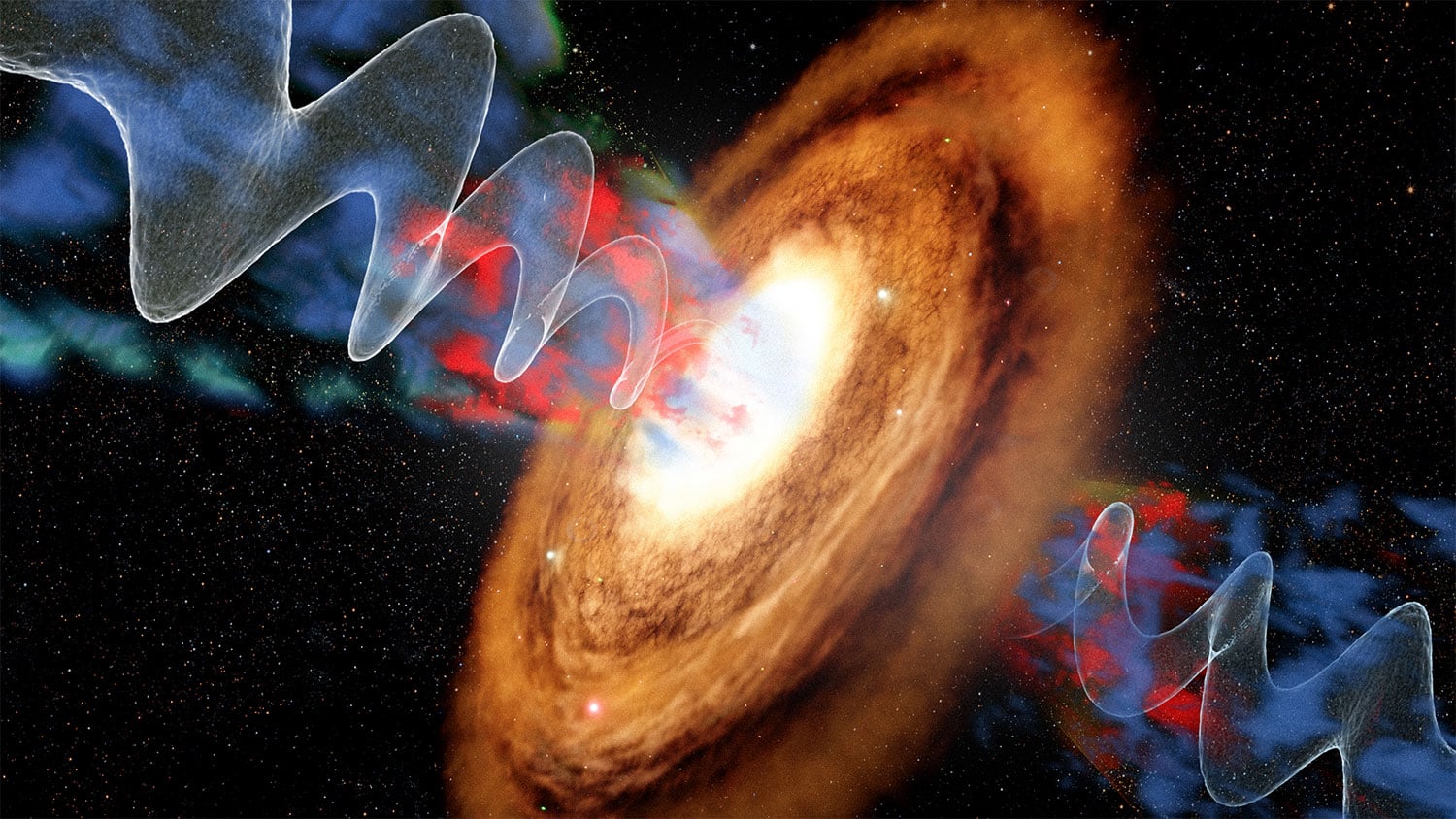
So, we’ve known for years that supermassive black holes (SMBHs) don’t just sit there looking cool—they power Active Galactic Nuclei, fling out relativistic jets, and generally act like cosmic vacuum cleaners with an identity crisis. But this new discovery? A 20,000-light-year jet in a young, merging galaxy? That’s not just ‘big’—it’s rewriting textbooks.
我们早就知道超大质量黑洞(SMBH)不只是安静地待着装酷——它们驱动着活跃星系核,喷出接近光速的喷流,整体就像一台有身份焦虑的宇宙吸尘器。但这次的新发现?在一个年轻的、正在合并的星系里发现长达两万光年的喷流?这已经不是‘尺度大’的问题了,这根本是在重写教科书。
The real kicker? These jets are precessing—wobbling like a spinning top—suggesting the central black hole might actually be a binary system. If proven, this could explain why some galaxies shut down star formation way earlier than expected. Also, the idea that a black hole can strip gas at 20 solar masses per year? That’s like deleting an entire star every two weeks. Chilling.
最震撼的是?这些喷流正在进动——像陀螺一样摆动——暗示中心黑洞可能是双黑洞系统。如果被证实,这或许能解释为何某些星系比预期更早停止恒星形成。此外,黑洞每年剥离20个太阳质量的气体?相当于每两周抹掉一颗恒星。细思极恐。
我那个年代,我们还认为相对论性喷流只出现在古老、死亡的椭圆星系里。如今在一个年轻的旋涡星系合并过程中,竟看到进动喷流?还实际观测到对恒星形成的反馈影响?这已经不只是惊讶了——就像看着孙辈发明了时光机。你缓缓点头,低声说:‘好吧,教科书是得重写了,不是吗?’
等等。在我们都大喊‘我发现了’之前,先别急。相关性不等于因果性。没错,喷流又大又摆动,也确实在星系合并过程中。但我们确定是喷流导致气体流失,而不是合并本身搅乱了一切吗?先确认第二个黑洞存在,再谈重写天体物理学吧。
尊重怀疑态度,但数据是多波段且交叉验证的:凯克望远镜的光学气体图,韦伯的高温冕状等离子体,甚大阵的螺旋状射电喷流。这不只是一条信号——而是一场交响乐。当三个乐团演奏同一首曲子时,你不能称之为噪音。
等等……这是否意味着银河系也可能经历过类似阶段?比如,人马座A是否曾向盘面喷射等离子体?这就能解释很多事了——比如为何银河系中心区域恒星异常稀少。我的脑子炸了。
让我着迷的不是喷流本身,而是我们对星系的‘叙事’如何演变。我们曾构建一个故事:黑洞安静进食,恒星有序形成,星系缓慢老化。如今一次观测就将其粉碎。这令人谦卑。它提醒我们,宇宙根本不在乎我们那些整齐的模型。
两万光年。接近光速。螺旋结构。如果我们能利用其中0.1%的能量,星际旅行早就解决了。但还有一点——想象一艘飞船被卷入这股喷流。前一秒你还在校准仪器,下一秒就成了穿越仙女座的亚原子粒子流。
刚看了KCWI的原始数据——那些气体外流美得惊人。我们在实验室里叫它‘宇宙之矛’。看到它延伸两万光年时……完全不是模拟预测的结果。老实说?我们都尖叫了。