Is This the Holy Grail of Quantum Computing? i-Wave Superconductivity in PtBi2 Spills the Tea
양자 컴퓨팅의 성배인가? PtBi2에서 발견된 i-웨이브 초전도체가 폭로된 진실
www.nature.com
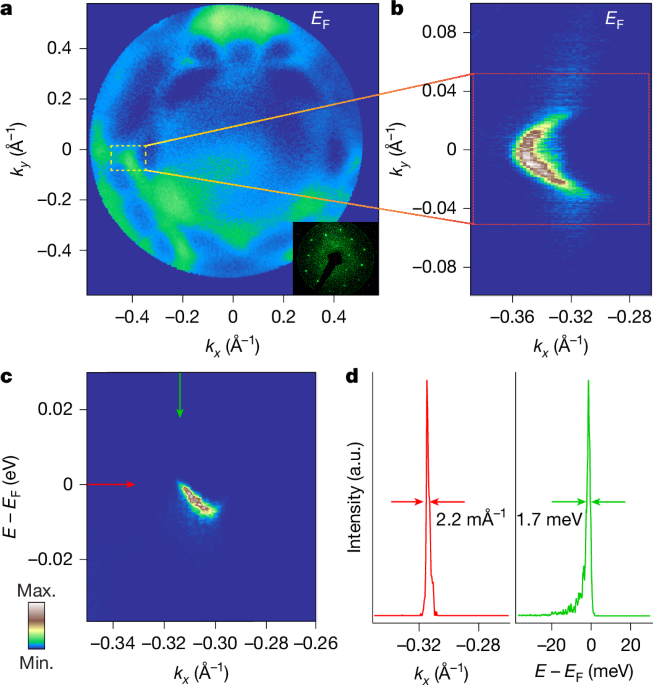
So apparently, physicists have observed nodal superconductivity in PtBi2 with i-wave symmetry — that’s l = 6 for the uninitiated — which is wild because no one's seen spectroscopic proof of pairing beyond d-wave before. This isn’t just another incremental paper; it’s like finding a 12-string guitar in a world that thought 6-strings were revolutionary.
어쩌면, 물리학자들이 i-웨이브 대칭성이 있는 PtBi2에서 노드 초전도성을 관측한 모양입니다—이건 초보자들을 위해 말하자면 l=6이라는 뜻인데요—이전까지 d-웨이브 이상의 페어링에 대한 분광학적 증거가 전혀 없었기 때문에 정말 놀랍습니다. 이건 단순한 점진적인 논문이 아니라, 6현 기타만 있었던 세상에 갑자기 12현 기타가 나타난 것과 같습니다.
The real kicker? These surface Majorana cones could enable fault-tolerant quantum computing. But let’s be real — the material’s still got a noisy metallic bulk. So it’s like discovering a silent ninja that lives inside a roaring rock concert. Brilliant, yes. But can we actually use it?
진짜 결정적 포인트는? 이 표면 마조라나 콘은 오류를 견디는 양자 컴퓨팅을 가능하게 할 수 있습니다. 하지만 현실을 직시해봅시다—이 물질은 여전히 번잡한 금속 성질의 본질을 가지고 있죠. 마치 요란한 록 콘서트 안에 조용한 닌자가 사는 것과 같습니다. 놀랍긴 하지만, 실제로 사용할 수 있을까요?
성급하게 기대하지 맙시다. i-웨이브 페어링은 확실히 대단하지만, DFT와의 일치가 바로 증거는 아닙니다. 전하 이동 측정이나 주사터널링현미경(STB)에서 나오는 결정적 증거는 어디에 있습니까? 데이터는 깔끔하긴 하나, 어쨌든 한 가지 기술의 해석일 뿐입니다.
당신의 회의론은 이해하지만, 여기서의 ARPES 해상도는 전례 없이 놀랍습니다. FWHM이 1.7meV인데, 이건 기록적인 수준이에요. 잡음이 그 정도로 낮아지면 해석을 쉽게 무시하기 힘들어져요.
A2 대칭 조건이 i-웨이브 페어링을 강제한다는 점은 사실 매우 우아합니다. 단순히 '노드를 보고 sin(6ϕ)로 맞춘 것'이 아니라, 대칭성이 그것을 필연적으로 요구한다는 점이죠. 이건 아름다운 이론적 골격입니다.
판 형태의 표면에서 여섯 개의 마조라나 콘? 너무 많은 가정이 따라붙어요. 게다가 가장자리 모드는 단지 완구 모델에서 나온 거고요. 나는 당장이라도 그 가장자리 상태를 보여주는 실제 STM 영상을 원해요.
본질 상태를 억제할 수 있다면 이건 큰 전환점이 될 수 있어요. 초박막 필름이나 이종 구조를 통해 표면을 분리할 수 있죠. 우리는 이전에도 TMDs에서 해본 적이 있어요—여기서 왜 안 된다는 거죠? 가장자리 모드는 위상 큐비트를 위해 쉽게 다가갈 수 있는 기술입니다.
누군가 마조라나 콘이 왜 양자 컴퓨팅에 좋은지 설명해주실 수 있나요? 글은 읽었는데, 왜 일반 큐비트보다 특별한지 아직도 잘 모르겠습니다.
왜냐하면 마조라나 모드는 자기 자신이 반입자이며 비국소적으로 존재하기 때문에, 오류(예: 얽힘 붕괴)가 하나만을 뒤집을 수 없기 때문입니다. 이것이 바로 위상적 보호의 핵심입니다.