Why Were These Medieval Women Buried in a Luxury All-Female Compound? Was It a Secret Nunnery?
왜 중세 여성들이 이런 고급스러운 여성 전용 공동체에 묻혔을까? 비밀 수녀원이었을까?
www.bbc.co.uk
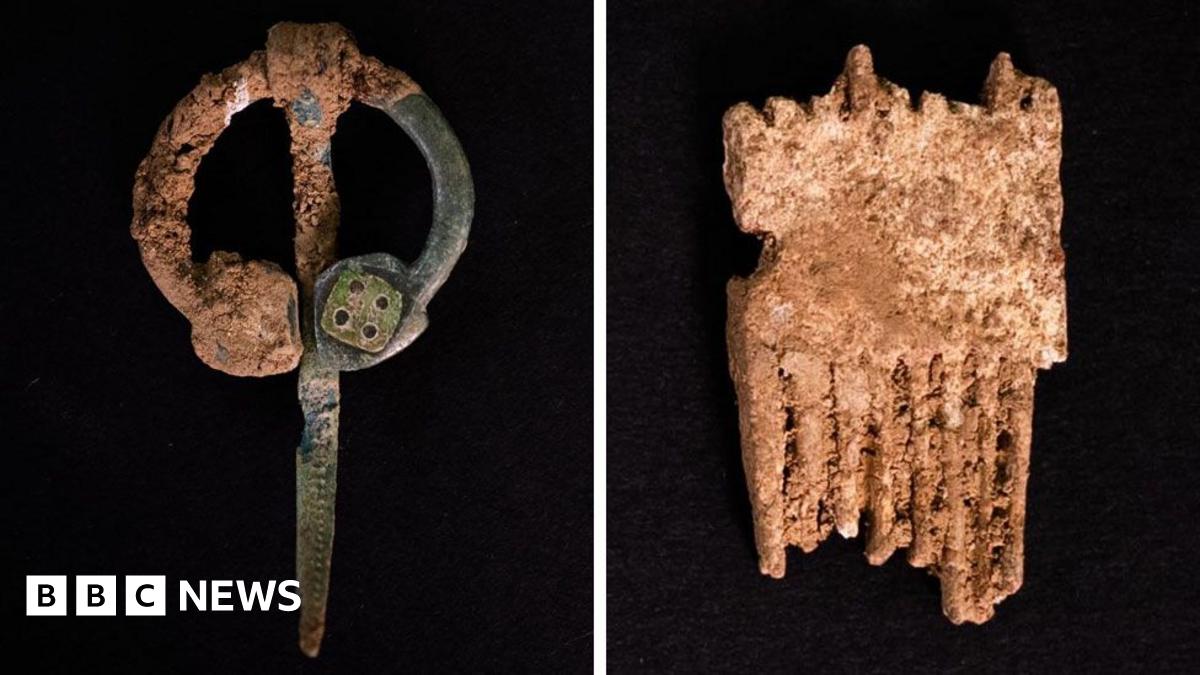
So archaeologists in Wales just uncovered a 6th-century cemetery with 58 skeletons—almost all women—and now they’re pretty sure it was part of an early female religious community. The site has luxury items like gilded brooches and multicolored glass beads, which suggests wealth, while a central ‘shrine-like’ structure hints at spiritual significance.
웨일스의 고고학자들이 6세기 무렵의 무덤을 발굴했는데 시신 58구 중 거의 모두가 여성입니다. 이제 연구진은 이곳이 초기 여성 종교 공동체의 일부였을 가능성이 크다고 보고 있습니다. 여신상 같은 구조물이 중앙에 있고, 도금된 옷고리와 다채로운 유리 구슬 같은 고급 물품들도 나오는 점에서 부유함과 종교성 둘 다 암시되고 있죠.
But here’s the twist: two women were dumped in a ditch, hands and feet bound. No careful burial, no fancy beads. Were they outcasts? Accused of heresy? And let’s be real—this ‘holy’ place had men and children too. So what was really going on? The more we learn, the creepier it gets.
하지만 반전은 여기 있습니다. 두 여성이 손발이 묶인 채 도랑에 버려졌습니다. 신중한 장례도, 멋진 구슬도 없었죠. 이들은 추방된 자들일까요? 이단 혐의를 받았을까요? 그리고 어쩌면 이 '성스러운' 장소에도 남성과 아이들이 있었다는 점을 직시해 봅시다. 도대체 무슨 일이 실제로 벌어지고 있었던 걸까요? 우리가 알수록 점점 더 기묘해집니다.
'비밀 수녀원'이라는 결론을 너무 서두르지 맙시다. 여성 중심이라는 점은 맞지만, 6세기 웨일스에는 기록이 남아 있지 않아서 우리가 물질 문화를 해석하는 시각은 어쩌면 지나치게 현대적일 수 있습니다. 그 '성소'는 그냥 농가일 수도 있어요. 신화 만들기에 앞서 방사성 탄소 연대 측정과 DNA 분석이 필요합니다.
왜 기독교라고 단정하세요? 이 여성들은 켈트 자연 숭배 종교의 여사제였을 수도 있어요. 구슬, 옷고리, 중심 구조물 주변에 집중된 매장 방식—모두 기독교 이전 시대의 성스러운 여성성 에너지를 강하게 암시합니다. 모든 것에 유다-기독교 레이블을 붙이려는 걸 그만두세요.
모든 고대 종교 유적이 다 '성스러운 여성성 에너지'가 될 필요는 없어요. 이 여성들은 하나님을 위해 조용히 생을 바친 성스러운 수녀일 수도 있죠. 도랑에 묻힌 두 명은? 죄인이거나 파문된 자들일 거예요. 우리는 모든 사람을 순교자로 만들 필요가 없습니다.
여기서 진짜 이야기는 무역입니다. 저 유리 구슬들? 프랑스 또는 중동에서 온 것일 가능성이 큽니다. 이 '성스러운 장소'는 장거리 무역로와 연결되어 있었어요. 이 여성들이 고립된 존재가 아니라, 세계적인 감각을 가진 사람들이었죠.
두 여성이 묶여 도랑에 버려졌죠. 멋지네요. 반면 다른 이들은 보석 구슬과 성스러운 성소를 얻고요. 전형적인 남성우월주의예요—삶에서도, 죽음에서도 여성의 신체를 통제하는 거죠.
이 모든 것을 디지털로 공개할 수 있잖아요. 유물에 클릭하면 정보가 뜨는 3D 모델, 라틴어 파편 번역본까지! 연구진이 온라인에 공개한다면, 전 세계 학생들과 역사 마니아들이 함께 과거를 해석할 수 있을 겁니다.
고고학은 낭만시하지 않으면서도 여전히 성스러운 맥락을 존중할 수 있습니다.