Wait, Estrogen Is Secretly Optimizing Our Brains? How Hormones Supercharge Reinforcement Learning (And Why It’s Not Just About Reproduction)
まさかの真相?女性ホルモン『エストロゲン』が学習能力を秘密裏に向上させていた!-報酬学習の新メカニズムとは
www.nature.com
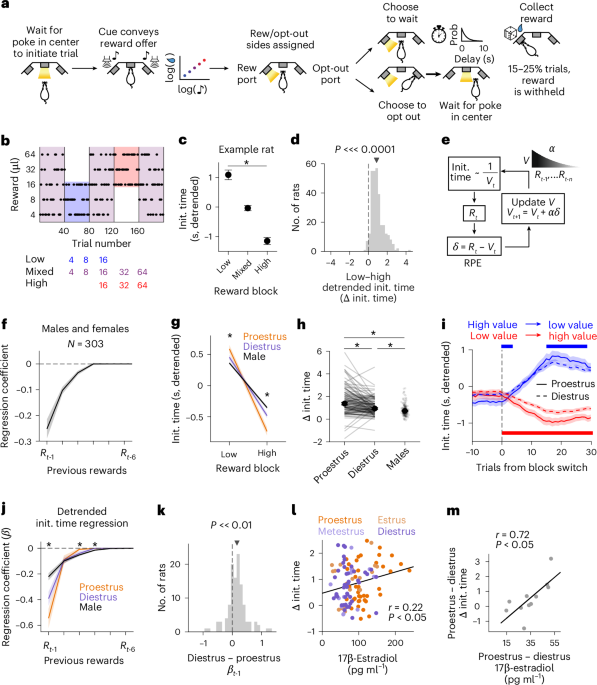
Okay folks, strap in—this new paper drops a serious bombshell: estrogen isn’t just about fertility and mood swings. Turns out, the hormone surging during proestrus actually turbocharges how female rats learn from rewards. We’re talking real-time, trial-by-trial reinforcement learning enhancements—thanks to some slick neural modulation in the nucleus accumbens. The dopamine response to reward prediction errors (RPEs) becomes way sharper when estrogen is high. Like, your brain temporarily gets a cognitive upgrade during ovulation.
みなさん、準備はいいか?この新論文はとんでもない衝撃を与えるよ。『エストロゲン』ってのは、生育能力や気分の波だけに関係するんじゃない。実は、排卵前日(プロエストラス期)のホルモン増加期において、雌ラットの報酬からの学習能力が実際に強化されているのだ。核線条体(NAcc)での神経調節のおかげで、リアルタイムでの報酬学習が強化される。報酬予測誤差(RPE)に対するドーパミン反応は、エストロゲンが高いときに格段に鋭くなる。つまり、排卵期に脳が一時的に「知的バージョンアップ」しているようなものだ。
But here’s the real kicker: it’s not just the dopamine. Estrogen reduces the expression of dopamine transporters (DAT), which slows dopamine reuptake. Less reuptake = more lingering dopamine = stronger RPEs. It’s a biochemical hack—nature’s way of amplifying the learning signal precisely when reproductive fitness matters most. And before anyone says ‘But this is rats!’—if this mechanism exists in humans too, it could explain so much about cognitive fluctuations across the menstrual cycle.
しかし本当の驚きはこれだ。ドーパミンだけではない。エストロゲンはドーパミントランスポーター(DAT)の発現を抑え、再取り込みを遅くする。再取り込みが減ると、ドーパミンの体内滞留時間が延び、RPEが強くなる。これはまさしく生化学的な『裏技』だ。繁殖の適応度が最も高まる時期に、学習信号を自然が狙って増幅しているとも言える。『でも、これはラットの話だろう?』と言う人がいるかもしれない。しかしもしこの仕組みがヒトにも存在すれば、月経周期における認知変動の多くの謎を説明できるかもしれない。
これは大きいぞ。私たちは何十年も、出産サイクルを単なる『気分の乱れ』と片付けてきたが、認知能力の利点を完全に無視してきた。報酬学習が排卵期にピークを迎えるという事実――繁殖にとって環境学習が進化上有利な時期――は偶然ではない。学習モデルは「男性基準」であり続けた。今こそ、ホルモンの変動をモデルに組み込むべきだ。
興味深いが、乱暴な一般化はしてはいけない。ラットはヒトではない。エストラス周期は月経周期とは異なる。このDAT抑制効果が霊長類でも同様に起こるかは不明。また『学習の強化』とは、どんな現実世界の文脈においてか?実験室での試行開始の早さが本当に適応的行動か、それとも人工物か?
私たちは長年、ホルモンの変動を病的視してきた。PMSを非合理的と呼び、更年期を危機と呼んだが、『周期性』こそが進化した認知ツールかもしれないと無視してきたのだ。この研究は『ホルモンの気分』の見方を変えうる。『感情的』なのではなく、正確に調整された『学習フェーズ』にいるのかもしれない。
これはドーパミン再取り込みの『ジャックポット』だ。考えてみろ。エストロゲンはDAT・SERTを下げることで、SSRIや向精神薬の効果を自然に模倣している。これがなぜ一部の女性が月経周期で抗うつ薬に異なる反応を示すかの理由かもしれない。投薬プロトコルにはホルモンレベルを組み込むべきだ。
批判は理解できるが、効果量はしっかりしており(d > 0.4)、実験は満腹感の影響を排除するように設計されていた。RPEに基づくモデルが開始時間を予測できた以上、早い開始は恣意的ではなく、報酬最適化された行動だ。これは単なるノイズではない。
それに加え、ここでいう『強化された学習』とは単なる速度ではなく、状態価値のより正確な更新を指す。高エストロゲン期に過去の報酬への回帰係数が強くなることから、経験からの学習がより深く、微妙な調整がされていることがわかる。
待てよ?なぜ学習のピークが排卵期に一致する?パートナー探しフェーズ中に最適な評価が行われるべきではないか?真の要因は『学習強化』ではなく、快感欠如の低下や動機づけの向上かもしれない。相関は因果関係を意味しない。
図3の『大きなRPEへの乗数ゲインモデル』がそれをよく説明している。エストロゲンは大きな予測誤差をブーストし、高価値な出来事に対して学習を敏感にする。これは繁殖期だけでなく、常に有用だ。