Wait—There Was a 15-Million-Year-Older Megalodon-Level Shark? What Else Don’t We Know About Prehistoric Oceans?
ちょっと待って、メガロドン並みの巨大サメが1500万年も前にいた? 他にも私たちが知らない古生代海洋の真実ってあるの?
www.sciencedaily.com
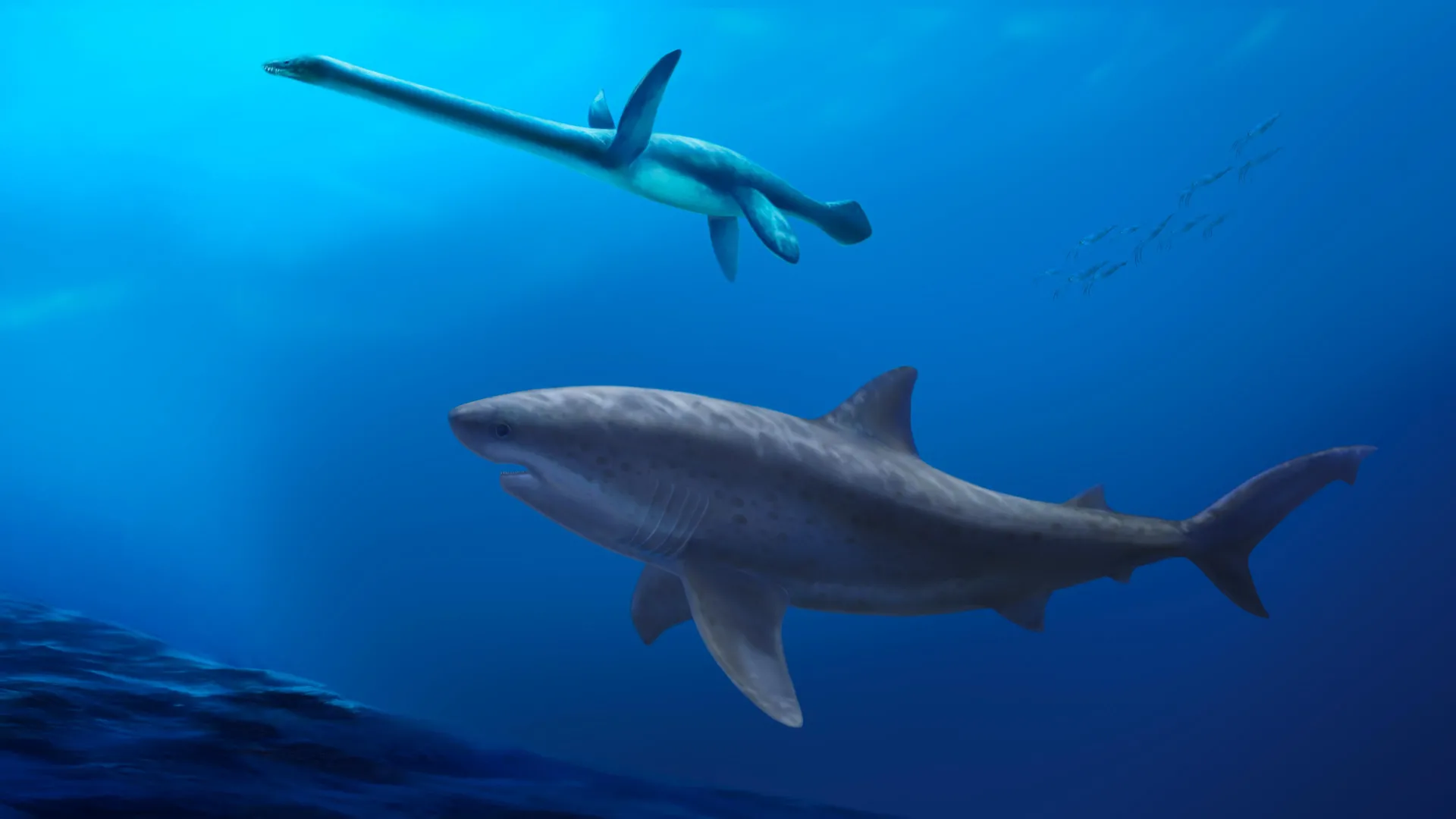
So scientists just casually dropped a bombshell: a shark the size of a Megalodon was already chilling in the waters north of Australia while dinosaurs were still stomping around—15 million years earlier than we thought such giants existed. This isn’t just a new fossil; it flips the entire timeline of shark evolution on its head.
つまり、科学者たちはさも何でもないかのように衝撃発表をしたわけだ。かつて恐竜が歩き回っていた時代、オーストラリア北部の海にすでにメガロドンサイズのサメが悠々と泳いでいた——巨大サメがいたと考えられていたよりも1500万年も前だ。これは単なる新化石発見じゃない。サメの進化史そのものを書き換える発見なんだ。
And get this: they figured it out from vertebrae the size of dinner plates. No skull, no jaws—just backbones whispering secrets from 115 million years ago. Meanwhile, we complain when our Wi-Fi drops for five seconds. Makes you rethink what ‘hard evidence’ really means.
そしてもう一つ衝撃的なのは、彼らが発見したのは夕食用の皿ほどの大きさの背骨だけだということ。頭骨も顎もなし。1億1500万年前の背骨がひそひそと秘密を語っていたのだ。一方、私たち人類はWi-Fiが5秒間途切れたことで大騒ぎする。『確かな証拠』とはそもそも何なのか、考え直す必要があるんじゃないか。
この発見の真の意味は大きさだけじゃない——生態系との関係性にある。カードビオドンティド科のサメたちは単に巨大だった訳ではない。首長竜や魚竜といった海生爬虫類と並んで頂点捕食者として共存していたのだ。つまり、白亜紀中期の海では複数の巨大頂点捕食者が支配権を争っていたということだ。これは『サメvsイルカ』のような話ではなく、海洋捕食における本格的な軍拡競争だった。
週末ごとにダーウィンの海岸でかっこいいサメの歯を探している身としては、これを読むと自分が聖地を歩いているような気分になる。あの岩には木よりも古い物語がある。それになぜまだ『ただの歯』と呼ぶの? あれはエナメルでできたタイムマシンだよ。
つまり言いたいのは、古代のオーストラリアにはメガロドンサイズのサメも、巨大海獣もいたってことだろ? それなのにまだネットフリックスでドラマ化されてないの? これはもう『プレデターvsエイリアン』的な海洋スピンオフシリーズが確実に当たるってのに。
だから私は生徒たちにこう教えるんだ。科学とは事実を暗記することじゃない。間違っていたことを素直に受け入れる姿勢を持つことなんだ。化石一つで教科書が書き変わることだってある。これを中学校の授業で取り上げてほしい。進化がもっと具体的に感じられるようになる。
あるいは… もともとサメはずっとこんなに巨大だったけど、骨格が化石になりにくいから見えなかっただけじゃない? 何百万年もの間、巨大な影のサメたちが海を支配していて、私たちが見過ごしてしまっただけかも? ただ言いたいだけだけど、深海が隠しているものは私たちが認める以上に多いんだよ。
楽しい話だけど、ちょっと盛り上がりすぎじゃない? 背骨5つから全体のサメを推定しているわけだ。何本かの肋骨からティラノサウルスの大きさを割り出して、これが新種だって呼ぶようなものだ。この推定の飛躍はあまりに大きく、ましてや行動パターンの想定には到底ついていけない。
古代のサメ化石を実際に見たい人のために、スウェーデン自然史博物館には常設展示がある。あなたは実際にその背骨と真正面から向き合える。それはとても神聖な体験だ。1億1500万年経っても、私たちはまだ彼らの名前を学び続けている。