Scientists Discover 'i-wave' Superconductivity in PtBi2 — Are We Closer to Quantum Computing Revolution?
研究者、PtBi2における「i波」超伝導を発見——量子コンピューティング革命へ前進か?
www.nature.com
Hold up—i-wave? That's not some sci-fi prop; it's l = 6 angular momentum pairing in a real material. For decades, d-wave (l = 2) has been the poster child of 'unconventional' superconductivity. Now, PtBi2 isn't just breaking the mold—it's shattering it with sixfold symmetry nodes that hint at surface Majorana cones.
待って、i波? それはSFの小道具じゃなく、現実の物質におけるl=6の角運動量対称性だ。何十年も、d波(l=2)が『非従来型』超伝導の代表格だった。だが今、PtBi2は単に型を壊すだけでなく、六重対称性ノードを持ち、表面マヨラナ円錐を示唆するほどに枠をぶち破っている。
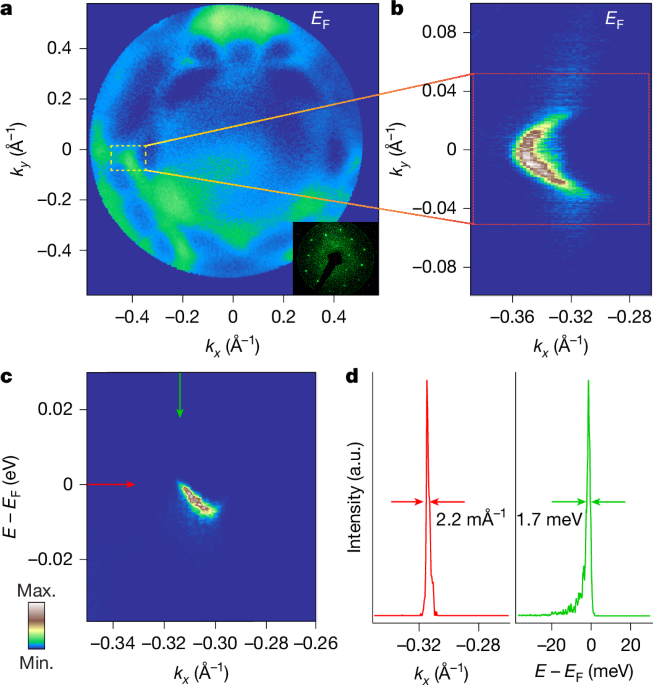
The kicker? These aren't just theoretical constructs. ARPES data shows clear nodal gaps, and symmetry analysis points to six Majorana cones per surface—all with the same winding number. This makes PtBi2 an 'anomalous' topological superconductor, a category so rare it’s practically mythical. But before we all buy stock in quantum startups, the bulk remains metallic. So it’s not plug-and-play quantum hardware… yet.
肝心なのは?これらは理論上の構造にとどまらない。ARPESのデータは明確なノードギャップを示しており、対称性解析は表面ごとに6つのマヨラナ円錐(すべて同じ巻き数)を示している。これによりPtBi2は「異常」トポロジカル超伝導体になった。その類稀な分類は実に神話的だ。しかし、量子関連企業の株を買う前に注意。バルク部分は金属性のまま。つまり、すぐ使える量子ハードウェアではない…まだね。
真のブレイクスルーはARPESの分解能だ。エネルギー分解能はmeV以下、運動量分解能はmÅ⁻¹以下という。固体からの光電子分光で得られた最もシャープな線形状だ。これは段階的進歩ではない。実験能力における量子飛躍だ。『i波』主張はこの精度に完全に依存している。なければ、ただの曖昧なノードで終わる。
まだシャンパンを開けるのは早い。同じ巻き数を持つ6つのマヨラナ円錐? 私には『表面のアーチファクト(人為的結果)』としか思えない。表面の汚染や非対称再構成は除外したのか? 論文は『清浄な劈開』と言っているが、私の研究室では『清浄』は相対的だ。異常な主張には異常な証拠が必要だ。特にそれが単一表面のデータに依存しているならなおさら。
まあ、バルクが金属性なら仕方ない。でも表面のマヨラナ円錐? ゼロエネルギーのヒンジモード? それはまさにトポロジカル量子ビットの設計図だ! 超薄膜が作れれば、耐障害性量子計算の話になる。これは『いつか』じゃない。ロードマップがあるんだ。誰がすでに特許を書き始めている?
ここには皮肉がある。80年代、アンダーソンとレッグットはすでに高l対称性を理論化していた。だが当時のコンセンサスはそれを封じ込めた。『物理的に非現実的』だと。今から40年後、自然がこう言っている:『ほら、びっくりした?』
いいね。また『量子計算を可能にする』物質か。ナノメートル精度、欠陥ゼロ、液体ヘリウムで満たされた研究室が必要と。私の研究費申請がお礼を言っているよ。
えっと…マヨラナ円錐って一体何? ディラック円錐みたいに、でも『半電子』のためのもの?
ディラック円錐=電子+正孔。マヨラナ円錐=電子=正孔(自己共役)。あのヒンジ局在? 異常高階トポロジーにおけるバルク境界対応の帰結だ。間違ってはないが、SFよりも奇妙だ。
待っていろ。10年もすれば、「PtBi2ヒンジモード量子チップ」がベンチャーキャピタルのプレゼ資料に載っているだろう。いつだってナチュア論文から始まり、ユニコーン企業で終わるんだ。